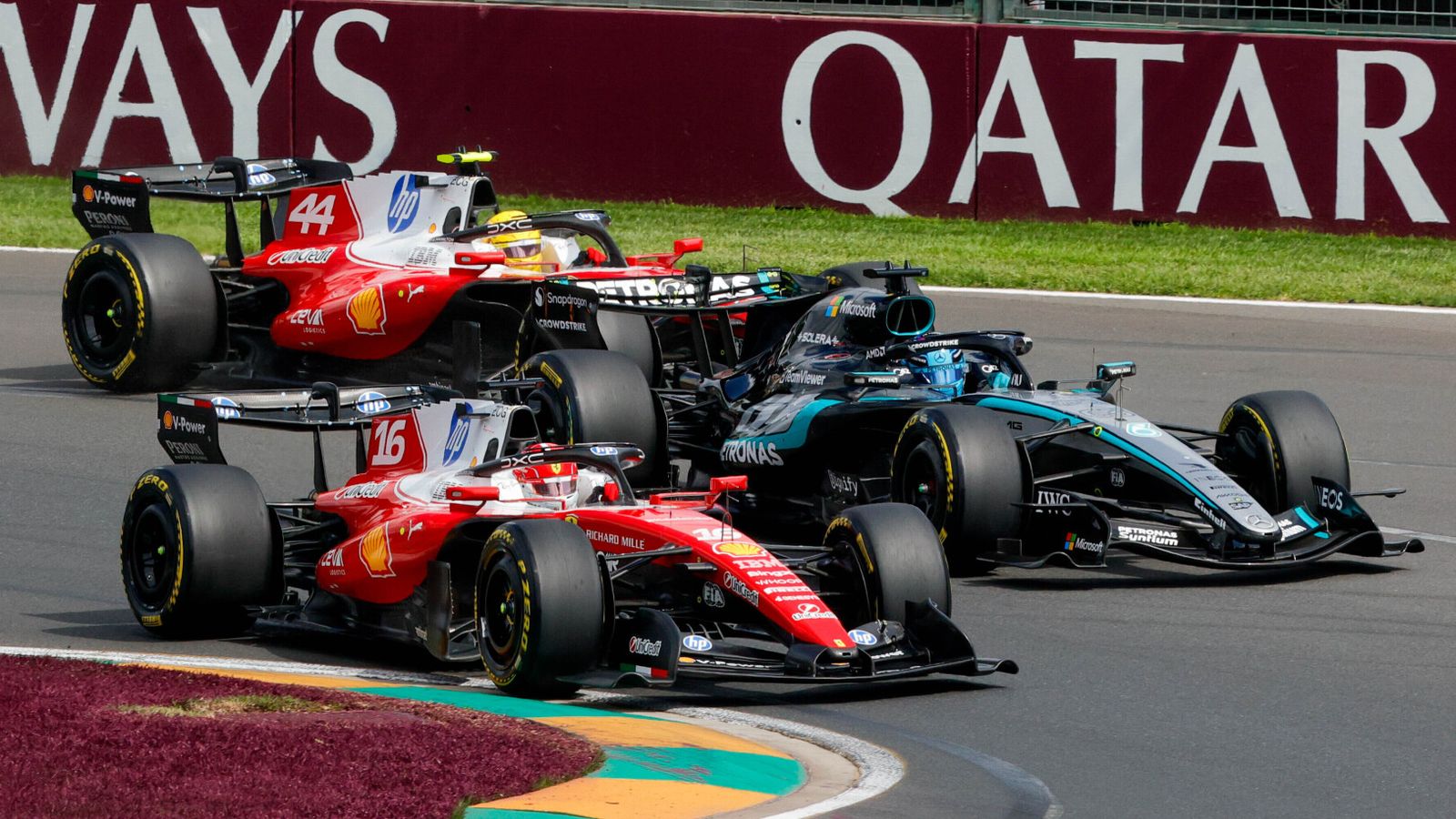
Formula 1 bosses have confirmed a package of tweaks to the sport's 2026 regulations that is designed to appease driver concerns over their safety and certain elements of competition.
A meeting on Monday - attended by F1, the FIA, team bosses and chiefs from engine manufacturers - saw several changes agreed upon for the upcoming Miami Grand Prix.
Energy harvesting and deployment limits have been changed for qualifying in an attempt to allow drivers to push closer to flat out and reduce the amount they are required to lift and coast.
Similar measures have been introduced for races, along with capping of boosts and limits to power deployment in corners to improve safety.
Changes to the start procedure will be trialled in Miami, with the focus on improving safety by ensuring cars who struggle to pull away are not left as a hazard to others on the grid.
There were also changes to the regulations for wet weather conditions, largely focused on improving safety.
In what was widely considered to be the biggest regulation change in the sport's history, the introduction of new power units, along with new chassis, saw electrical power increased to share a 50-50 split with internal combustion engines.
An FIA statement said: "A number of refinements to the 2026 FIA Formula One World Championship regulations were agreed today during an online meeting between the FIA, Team Principals, CEOs of Power Unit Manufacturers and FOM.
"The final proposals presented during today's meeting were the result of a series of consultations over the past few weeks between the FIA, technical representatives and extensive input from F1 drivers.
"Discussions around potential adjustments were based on data gathered from the first three events of the 2026 season."
Plans had always been in place to assess the early action and implement necessary alterations but focus on the regulations was heightened by both driver feedback and an extended gap in the schedule caused by the cancellations of races in Bahrain and Saudi Arabia due to conflict in the Middle East.
The dangers posed by drivers adjusting to the energy management system were highlighted by a big crash for Haas' Oliver Bearman at the Japanese Grand Prix, amid a significant speed differential with the car he was following.
Meanwhile, four-time world champion Max Verstappen has been highly critical of the racing the new regulations have produced, even suggesting he was considering his future in the sport as a result of his dissatisfaction.
Other drivers have offered more measured feedback, particularly on qualifying and safety, but there has also been plenty of praise for the wheel-to-wheel action that has been offered up, with seven-time world champion Lewis Hamilton suggesting he has never had more fun racing in F1.
Below are details of the changes the FIA announced on Monday, with final approval from the World Motor Sport Council, which should be a formality, required ahead of the Miami Grand Prix.
Formula 1 returns on May 1-3 with the Miami Grand Prix, the season's second Sprint weekend, live on Your Site F1.
